
Thinking, not just processing – when software actively assists
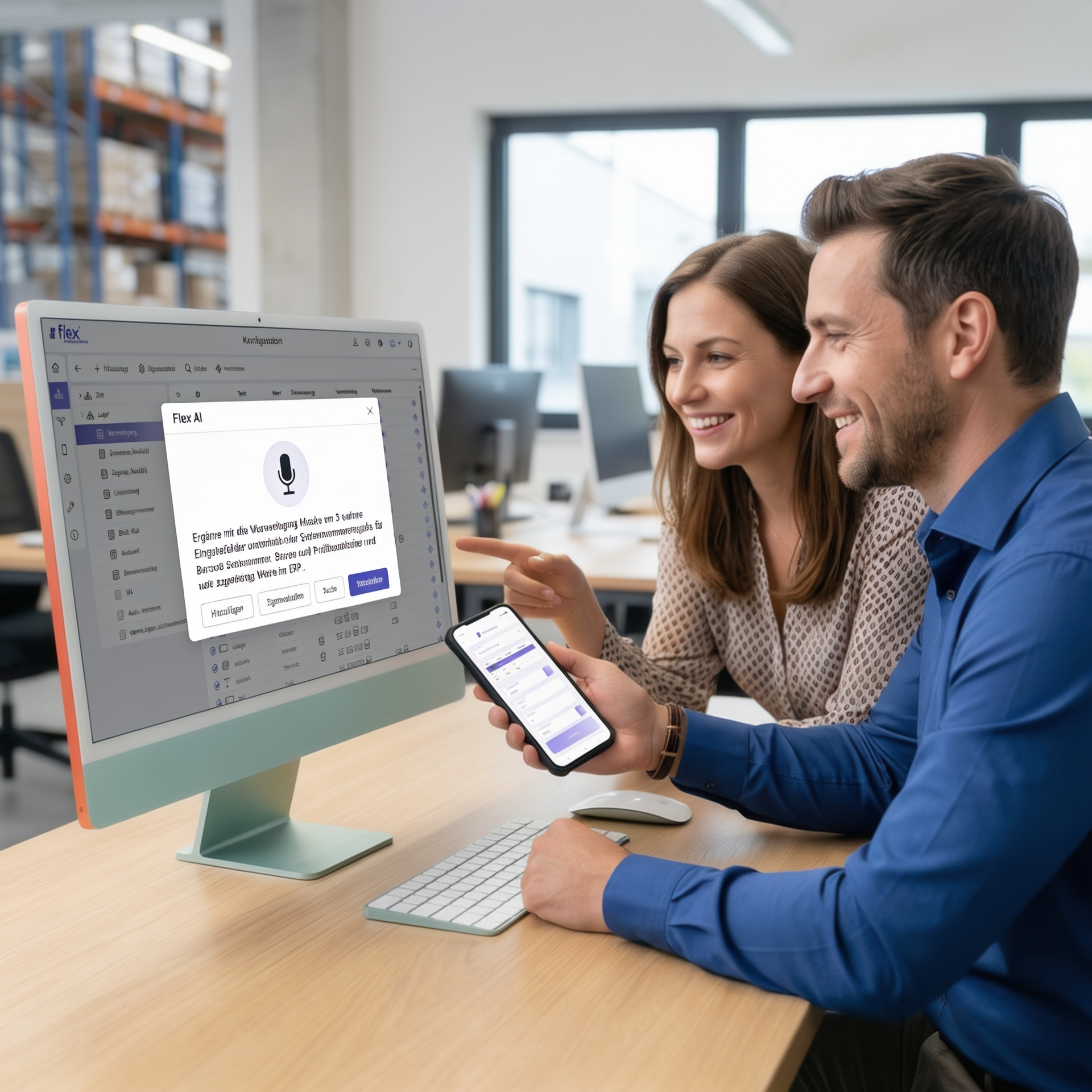
This is how software becomes an assistant.
Artificial intelligence is currently the dominant topic in software development. Virtually every provider is integrating new features and promising tangible efficiency gains. Yet in practice, the picture is quite different:
Many of these enhancements remain isolated and have little impact on the actual workflow. The crucial difference lies not in individual features – but in the extent to which software is integrated into existing processes.
From tools to collaborative systems
For a long time, software was seen as a tool:
The user enters data, initiates processes and actively controls the workflow. With new technological possibilities, this role is changing fundamentally. Systems are beginning to provide support themselves, recognise interrelationships and actively guide workflows.
The aim is no longer simply to map processes, but to understand and manage them efficiently in collaboration with the user.
Software is evolving from a tool into an active part of the work process.
Two ways to really take the pressure off
The greatest impact is achieved by thinking two steps ahead when it comes to software:
1. Creating applications in CCM
New applications are created more quickly, more easily and with greater flexibility. Functions, workflows and structures can be generated and adapted directly from the description. Even existing applications can be adapted via the description to reflect individual changes in processes.
2. Use in day-to-day operations on mobile devices
Interaction also changes in day-to-day use:
Inputs are automatically understood, mapped and integrated into existing business logic. The system recognises interrelationships and supports the user precisely where decisions are made. The result: fewer manual steps, fewer sources of error and significantly more efficient processes.
Why the platform plays a crucial role
AI alone does not make for a high-performance application. The platform on which it is built is crucial.
Many current approaches integrate intelligent functions into traditional web applications. In practice, however, these reach their limits precisely where stability, security and deep process integration are required.
In production environments in particular, the following are essential:
- integrated security mechanisms
- reliable offline capability
- direct access to device functions
- stable operations under real-world conditions
Native applications as the basis for real-world processes
The flexmobility platform is deliberately built on a native foundation.
This means:
- Applications access device functions such as the camera, GPS or scanner directly, without any detours
- Processes continue to function even without an internet connection and utilise encrypted offline databases
- Data is processed securely and synchronised in a controlled manner using state-of-the-art security features
- Workflows remain stable – regardless of infrastructure or location – as they can be used natively and offline
These characteristics are crucial when software is not merely being demonstrated, but is used reliably in day-to-day operations. This results in a genuine business application – not merely a front-end for functions.
From Feature to Process Intelligence
The current trend in AI often focuses on individual functions:
assistants, input fields or automations.
However, the real progress lies deeper – in the integration of these capabilities into existing processes.
Only when systems also understand and actively support workflows does a measurable benefit arise.
Conclusion
The future of business applications lies not in individual functions, but in how they work together.
Software becomes a competitive advantage when it reduces the user’s workload, actively supports processes and functions reliably under real-world conditions.
The foundation for this is a high-performance platform that meets precisely these requirements. After all, true efficiency does not come from AI alone – but from systems that work together.
Follow our blog and newsletter to find out more about the upcoming AI innovations on the flexmobility platform!